Trump Administration’s Knives Out for Cuba
As the plague of imperialism descends upon the island nation of Cuba, the world stands at a new crossroads. Namely, to accept the seemingly inevitable victory of U.S. militarism and corporatism over the Cuban people or to take a principled stand against Donald Trump’s latter-day Moloch. The threat is as real for Cuba as for any other nation that lacks a political leadership that effectively opposes the juggernaut of Trump-era imperialism. As explained by V.I. Lenin:
Capitalism has grown into a world system of colonial oppression and of the financial strangulation of the overwhelming majority of the population of the world by a handful of “advanced” countries. And this “booty” is shared between two or three powerful world plunderers armed to the teeth (America, Great Britain, Japan), who are drawing the whole world into their war over the division of their booty.
Lenin, V. I. “Preface to the French and German Editions.” Imperialism, the Highest Stage of Capitalism, 1920, Marxists Internet Archive, www.marxists.org/archive/lenin/works/1916/imp-hsc/pref02.htm. Accessed 25 May 2026.
The subjugation of Cuba has been a longstanding objective of the United States since the overthrow of Batista in 1959. For decades, the United States has consistently targeted the people and the post-revolution government of Cuba with covert and overt measures to disrupt daily life, topple the government, and return the nation to the American sphere of interest. Below is a partial list of the United States’ aggressive maneuvers against Cuba to date:
- 1961: The CIA-backed Bay of Pigs Invasion;
- 1961-62: Operation Mongoose, a broad covert program of sabotage, assassination plots, and economic disruption targeting Cuba;
- 1962: The S. economic blockade of Cuba, which remained in place until a thaw with the Obama administration in 2015, later restored by the Trump Administration in 2017;
- 1962: Operation Northwoods, a terrorist campaign later aborted and subsequently declassified in 1997;
- 1971: The introduction of African swine fever to Cuba by American operatives;
- 1976: The terrorist bombing of a Cuban airliner by ex-CIA agent Luis Posada;
- 1981: The introduction of dengue fever to Cuba by US operatives;
- 2003: The George W. Bush Administration’s “Commission for Assistance to a Free Cuba,” which imposed new restrictions on Cuba and introduced a “transition” plan for the regime change;
- 2025: The Trump Administration’s reversal of strict travel and financial restrictions rolled back under the Obama Administration;
- The sustained psychological war against the people of Cuba and its leadership, as detailed in the 1999 book, Psywar on Cuba, edited by Jon Elliston
(For additional details, review “US Intervention A Cuba Solidarity Campaign Fact Sheet, 2016.”)
But despite its well-documented hostility and aggression towards Cuba, the United States under Donald Trump has the unmitigated audacity to declare the long-suffering country a “threat” to American national security. U.S. Secretary of State and Acting National Security Advisor Marco Rubio, the son of Cuban expatriates, is the Trump Administration’s person on Cuba. Rubio has long expressed his desire to “liberate” Cuba from its present leadership. For Trump himself, the overthrow of the Cuban government would be a feather in his proverbial cap. As one commentator writes:
Cuba is a “national security threat” to the US, and the prospect of a peaceful agreement is “not high”, Marco Rubio has said, as the two countries edge closer to conflict.
The US Secretary of State warned that the Cuban government would not be able to “wait us out or buy time” as the Trump administration continued to increase pressure on the communist regime.
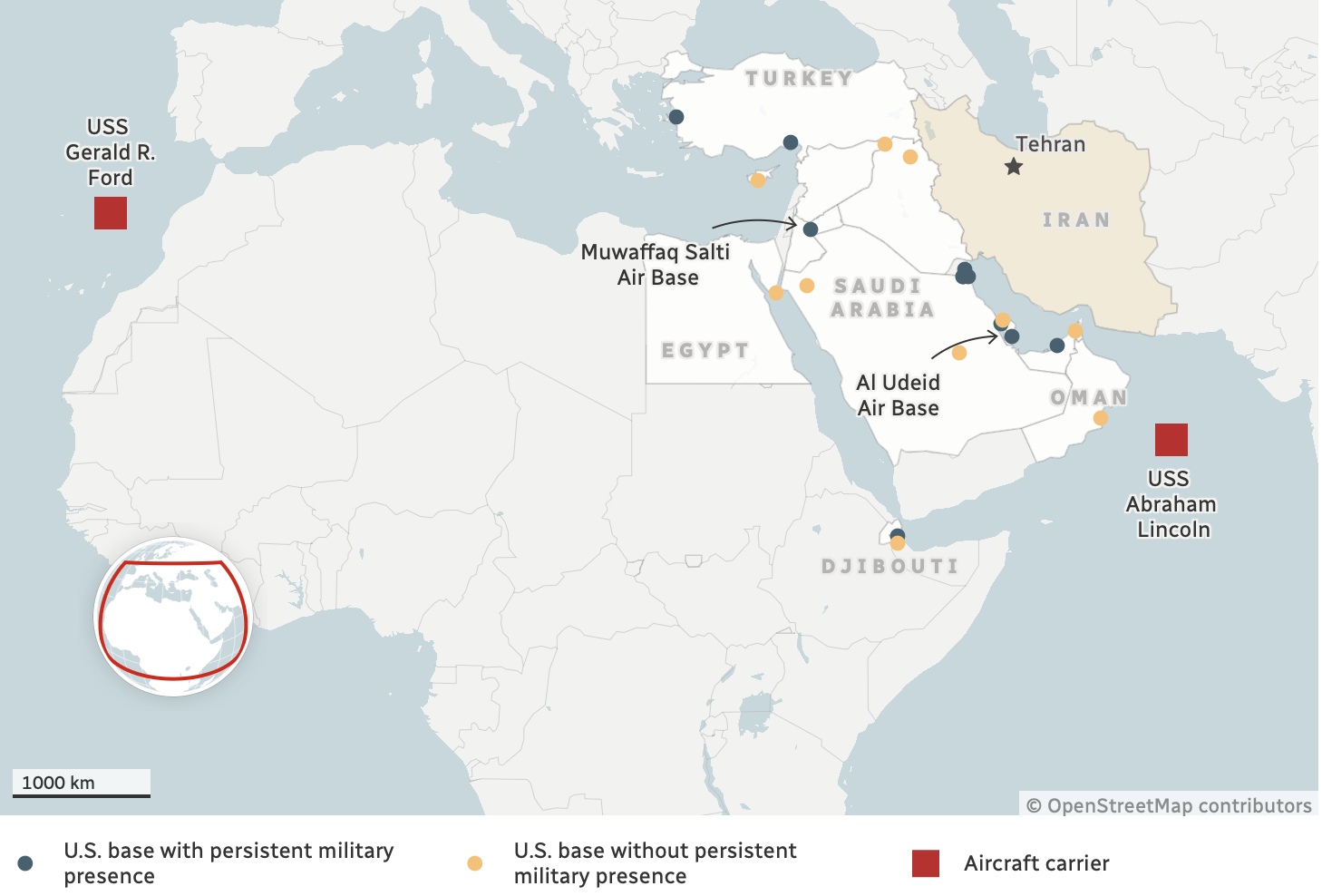
His threats followed the arrival of a US aircraft carrier in the Caribbean.
Donald Trump has suggested he could be the US president who finally takes decisive action against Cuba. He told reporters: “Other presidents have looked at this for 50, 60 years, doing something. And it looks like I’ll be the one that does it.”
Sebouai, Lilia. “Rubio: Cuba Is a National Security Threat.” The Telegraph, 22 May 2026, www.telegraph.co.uk/world-news/2026/05/22/marco-rubio-says-cuba-is-threat-to-us-national-security/. Accessed 25 May 2026.
Trump’s present campaign against Cuba has gained momentum since January. He applied maximum economic pressure to disrupt the lives of everyday Cubans:
First, the Trump administration stopped oil deliveries from Venezuela, Cuba’s main benefactor, after U.S. forces in January captured Venezuela’s president.
Then President Trump used the threat of tariffs to cut off foreign fuel shipments almost entirely, including from Mexico, Cuba’s other crucial supplier.
The Cuban government says its oil reserves have run out and that its aging electric grid is becoming increasingly unreliable. The country produces some oil but far from enough to meet its needs.
Outside Havana, the capital, power outages now last 20 hours a day. The lack of energy has set off an enormous humanitarian crisis that has become deadly.
Augustin, Ed, and Lisette Poole González. “Out of Gas, Cubans Cook With Charcoal and Wood to Survive.” The New York Times, 25 May 2026, www.nytimes.com/2026/05/25/world/americas/cuba-blackouts-fire-energy-oil.html. Accessed 25 May 2026.
Despite the egotistical motivations of Trump and Rubio, the primary goal in forcing the capitulation of Cuba is to enforce the rule of capital and propertied interests. The geopolitical scene is shifting dramatically in the present era, with new balances of power evolving in Europe and throughout Asia, and the U.S. government likely views the present as an ideal time to reimagine the world order and consolidate hegemony on the world stage.
During his second term, Trump has implemented a “maximum pressure” campaign against Cuba as part of a broader strategy to assert U.S. primacy in the Western Hemisphere and limit the influence of adversaries such as China and Russia.
Both the Trump administration’s National Defense Strategy and National Security Strategy prioritize the Western Hemisphere, emphasizing threats from foreign adversaries and transnational gangs and the need to reassert U.S. dominance in the region to protect Washington’s interests.
Roy, Diana. “Trump’s ‘Maximum Pressure’ Campaign on Cuba, Explained.” Council on Foreign Relations, 31 Mar. 2026, www.cfr.org/articles/trumps-maximum-pressure-campaign-on-cuba-explained. Accessed 25 May 2026.
Its recent military incursion into Venezuela and the capture and imprisonment of President Nicolas Maduro is still fresh in the minds of U.S, adversaries and allies alike. Hence, the Trump Administration now follows an almost identical path on the question of Cuba. On May 21, the U.S. Department of Justice unsealed a multi-count indictment against former Cuban leader Raúl Castro, among others.
The US has charged former Cuban leader Raúl Castro with conspiracy to kill US nationals and other crimes over the 1996 downing of two planes between Cuba and Florida.
The case unveiled on Wednesday accuses Castro and five others in the shooting down of the aircraft belonging to Cuban-American group Brothers to the Rescue and killing four people, including three Americans.
Castro, now 94, was then head of the country’s armed forces and faced international condemnation over the crash.
As the US seeks to exert increasing pressure on Cuba’s communist rule, President Miguel Díaz-Canel called the charges “a political manoeuvre, devoid of any legal foundation”.
Epstein, Kayla, Cecilia Barría, and Pascal Fletcher. “US Charges Cuba’s Raúl Castro with Murder over 1996 Downing of Two Planes.” *BBC News*, BBC, 21 May 2026, www.bbc.com/news/articles/c3r219yxl5eo. Accessed 25 May 2026.
The week prior, the Trump administration sent another unmistakable message to Cuba through the composition of its diplomatic entourage:
When CIA Director John Ratcliffe visited Havana last week for a rare meeting with senior Cuban officials, he brought along one of the operators involved in the U.S. mission to capture then-Venezuelan leader Nicolás Maduro earlier this year, multiple people familiar with the matter told CBS News.
Venezuela and Cuba were allies before Maduro’s arrest, and the Cuban government has said 32 of its military and police officers were killed in the January operation to extract Maduro.
Ratcliffe made a point of introducing the paramilitary leader to the Cubans as the one who killed their people in Venezuela, several sources said.
The presence of a paramilitary officer who was involved in capturing a key partner of the Cuban government just months earlier may have been intended to send a signal.
The CIA declined to comment.
DeFede, Jim, Jennifer Jacobs, and James LaPorta. “CIA Director Brought Paramilitary Leader Involved in Maduro Capture to Cuba Meeting, Sources Say.” CBS News, CBS Interactive Inc., 22 May 2026, www.cbsnews.com/news/cia-director-ratcliffe-paramilitary-leader-maduro-capture-in-cuba-meeting/. Accessed 25 May 2026.
Whether the U.S. launches a military strike against Cuba or continues its present course of economic warfare, the immediate future of the Cuban people appears exceptionally dire. Its revisionist leadership lacks the strategy and principles to resist the overwhelming weight of imperialist aggression. Its historical allies Russia and China, only utter weak objections and half-hearted condemnations of U.S. actions. In reality they offer little real protection for the Cuban people, and their present efforts are largely directed at redefining their own spheres of interest.
All told, the only principled resistance to U.S. imperialism is Marxism-Leninism, as formulated by J.V. Stalin in Foundations of Leninism:
“Leninism is Marxism of the era of imperialism and the proletarian revolution. To be more exact, Leninism is the theory and tactics of the proletarian revolution in general, the theory and tactics of the dictatorship of the proletariat in particular.”
Stalin, Joseph. “Introduction.” The Foundations of Leninism, 1924, Marxists Internet Archive, www.marxists.org/reference/archive/stalin/works/1924/foundations-leninism/introduction.htm. Accessed 25 May 2026.
As ever, we hold that building a Marxist-Leninist party will provide the oppressed people of the world with their best and only chance against imperialist domination. We call on all students and working people to demonstrate solidarity with the people of Cuba and work towards the establishment and growth of a Marxist-Leninist movement.
And while the present path appears bleak, those who aspire to build a new movement to challenge the rule of capital and its onslaught of imperialism should bear in mind Enver Hoxha’s assessment of the ultimate fallibility of these forces:
“Nothing can save imperialism, capitalism and revisionism from the remorseless vengeance of the proletariat and the peoples, nothing can rescue them from deep antagonistic contradictions and never-ending crises, revolutions, their inevitable demise.
It is precisely this situation which is driving imperialism to seek new roads and paths, to build new strategies and tactics, in order to escape the catastrophe awaiting it.”
Hoxha, Enver. “The Strategy of Imperialism and Modern Revisionism.” Imperialism and the Revolution, 1979, Marxists Internet Archive, www.marxists.org/reference/archive/hoxha/works/imp_rev/imp_ch1.htm. Accessed 25 May 2026.